 18+
18+
18+
18+
Free demo — no real money. Loads the provider's official demo build. Demos may be unavailable in some regions.
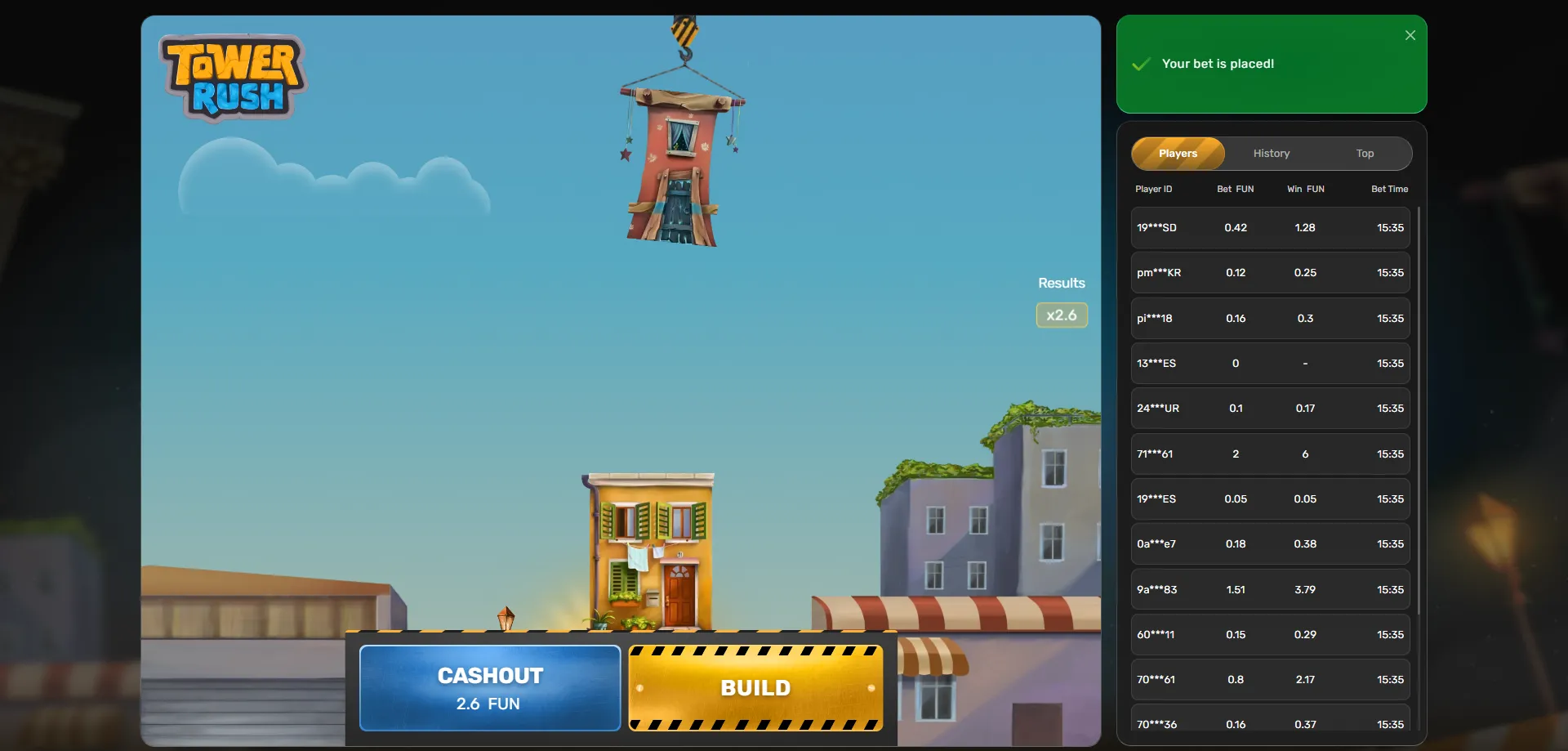
Tower Rush combines a high RTP of 98.50%, a unique tower-building mechanic, and an instant cashout feature — making it a game where thoughtful decision-making genuinely matters. Many players sit down, press Build repeatedly, and wonder why their balance drifts downward over time. The answer is rarely bad luck; it is almost always the absence of a plan. A systematic approach does not guarantee every session ends in profit, but it does mean you are making deliberate decisions rather than reactive ones.
Luck determines the outcome of any single floor drop in Tower Rush — the RNG decides whether each segment lands cleanly or causes a collapse. Strategy, however, operates across dozens or hundreds of rounds. A strategic player chooses a target multiplier before pressing Build, sets a hard stop-loss before the session begins, and sticks to those parameters regardless of what just happened. Over time, this consistency is what separates players who grind out positive sessions from those who chase losses into a depleted bankroll.
It is worth being precise about this. You cannot influence where the floor lands — that is determined by a certified RNG. What you do control is your bet size, your cashout timing, your session length, and your response to wins and losses. These four levers are the entire domain of Tower Rush strategy. Every tip in this guide operates within those boundaries. Accepting this clearly is the first step toward playing with discipline.
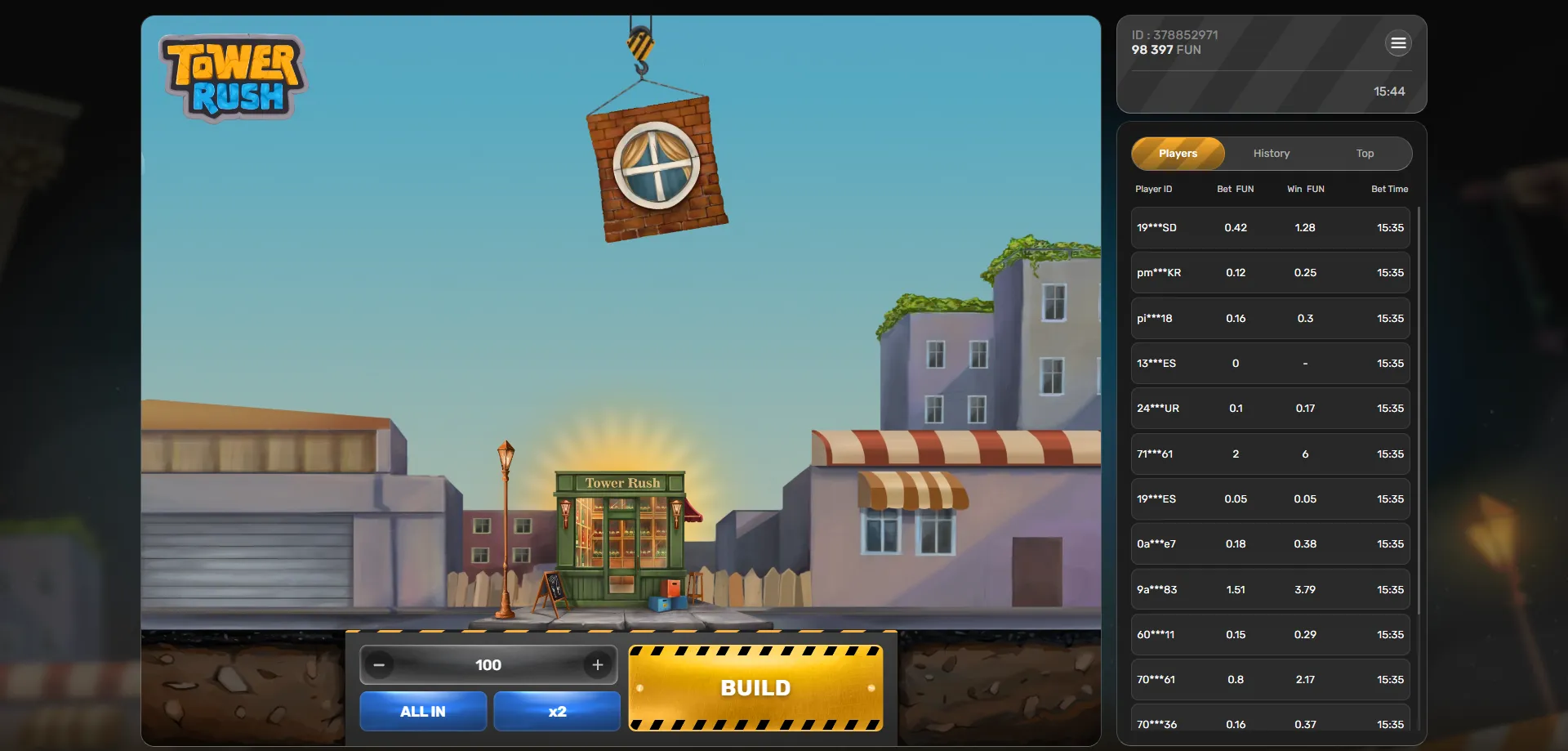
Before a single floor is dropped, strategic thinking should already be active. Understanding the mechanical properties of Tower Rush — specifically its RTP and volatility profile — shapes every tactical decision that follows.
Tower Rush carries an RTP of 98.50%, which is exceptionally high compared to standard video slots that typically sit around 96%. In practical terms, a higher RTP means the mathematical house edge is smaller, so your bankroll faces less theoretical erosion per round. The game operates with medium volatility, meaning it produces a relatively steady stream of small-to-medium wins rather than long dry spells punctuated by rare large payouts. For strategy purposes, medium volatility means early cashouts at modest multipliers (1.5x–2.5x) are a realistic and sustainable tactic rather than a compromise. You do not need to chase 10x or 20x to play profitably over a session — the game's design rewards patience at moderate multipliers.
Tower Rush does not have a traditional symbol paytable, but it does have a transparent payout structure: your return equals your bet multiplied by the multiplier active at cashout. Before playing, check the bonus floor details — the Frozen Floor preserves winnings at multipliers between 1.5x and 7x if a later crash occurs; the Temple Floor triggers a bonus wheel with slices ranging from 1.5x to 7x; and Triple Build adds three guaranteed floors. Understanding these mechanics tells you where the game's highest-value moments cluster. A session strategy that does not account for bonus floors is leaving meaningful upside unplanned.
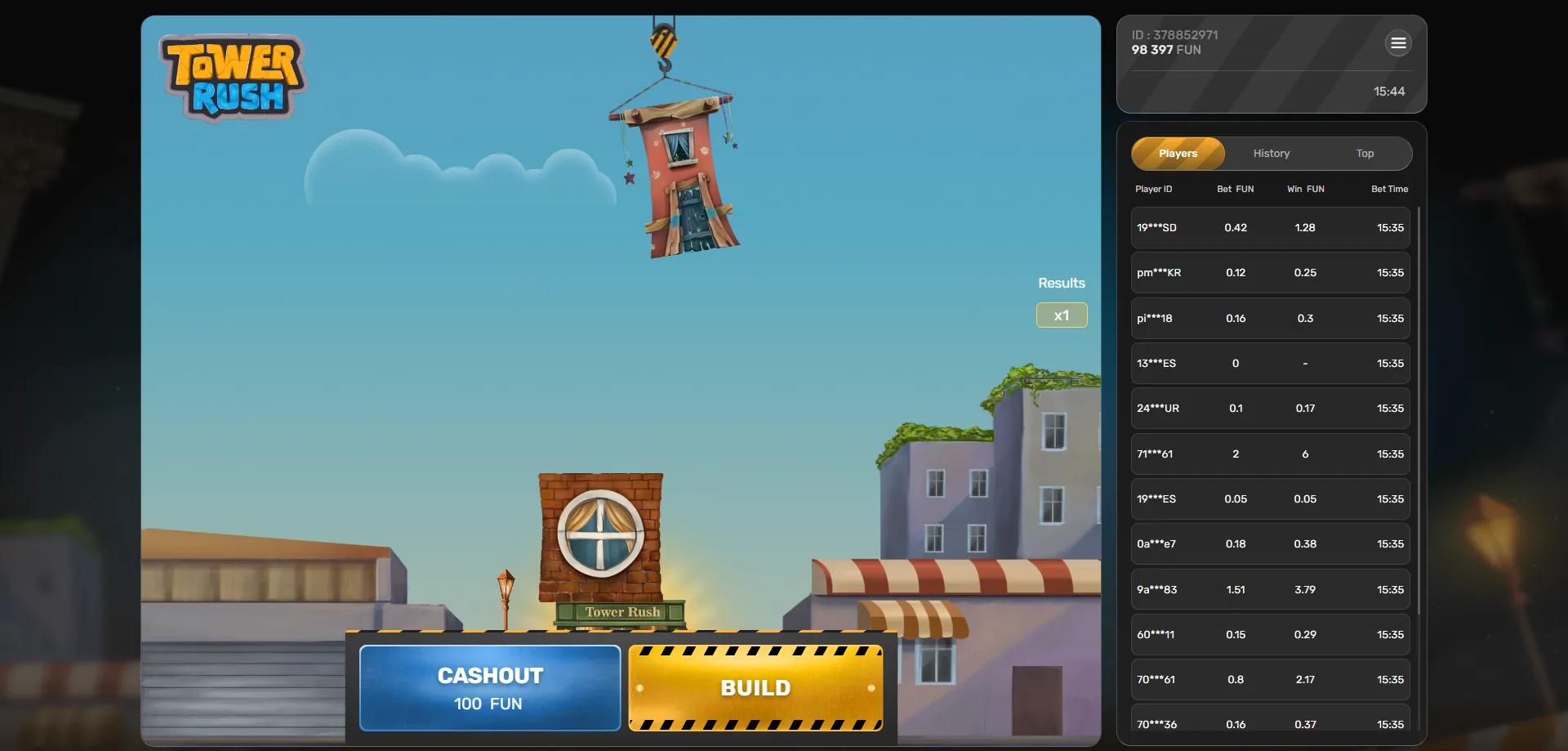
No betting system or timing tactic matters if your bankroll is gone before it has a chance to work. Bankroll management is the structural layer beneath every other tower rush strategy element. Getting this right means you can absorb a losing run without being forced out of the game.
The most robust approach for Tower Rush is to calculate each bet as a fixed percentage of your total available balance — typically between 1% and 3% per round. If your session bankroll is MYR 200, a 2% bet equals MYR 4 per round. This means you can survive at least 50 consecutive losses at a 2% stake before running dry, which is far more resilient than flat-staking an arbitrary amount. As your balance grows through wins, the absolute bet size grows proportionally but remains sustainable. As your balance contracts, the bet size shrinks automatically, protecting your remaining funds. The fixed-percentage method is sometimes called the Kelly-lite approach in casino contexts, and it is the recommended foundation for any tower rush tips and tricks framework.
Set two limits before every session: a loss limit (the maximum you are willing to lose before stopping) and a win target (the profit level at which you will end the session and bank the result). A practical guideline is a loss limit of 20–25% of your session bankroll and a win target of 30–50%. If you deposit MYR 100 for a session, stop when you are down MYR 20–25 or when you are up MYR 30–50. Write these numbers down before you start. The psychological power of a pre-committed number is far greater than a vague intention to stop "when things go badly." Combining fixed-percentage staking with hard session limits is the core of any serious tower rush strategy.
Once bankroll parameters are set, the next layer of a tower rush strategy involves how you vary — or do not vary — your bet size across rounds. Three broad approaches suit different player profiles and risk tolerances.
Flat betting means staking the same amount every single round regardless of outcomes. It is the simplest and arguably the most mathematically sound approach for a game with medium volatility and a high RTP like Tower Rush. Because the game already has a built-in edge in the player's favour compared to most casino products, flat betting lets the RTP do its statistical work without the distortion of escalating stakes. Players who choose flat betting typically pair it with an early cashout discipline — cashing out at 1.5x–2x consistently builds a slow, steady return that compounds across a long session. This approach is well suited to beginners and anyone prioritising session longevity over single-round excitement.
A progressive system — most commonly the Martingale, where you double your stake after a loss — carries obvious appeal: one win recovers all previous losses plus a small profit. In Tower Rush, a Martingale sequence starting at MYR 5 would require MYR 5 → MYR 10 → MYR 20 → MYR 40 → MYR 80 → MYR 160 after just five consecutive losses. That is MYR 315 at risk to recover MYR 5. The Fibonacci system (1–1–2–3–5–8–13–21…) is less aggressive and better matched to Tower Rush's medium volatility — stake increases are smaller, giving more room to recover before hitting table or bankroll limits. If you use any progressive system, set an absolute maximum step — never more than five increments — and return to your base stake after any win. Progressive systems are a tower rush lifehack only when used with strict caps; without them, they are a guaranteed bankroll-destruction mechanism.
The reverse pyramid (also called anti-Martingale) increases your stake after a win rather than a loss, and returns to base after a loss. The logic is that you are pressing your advantage when momentum is with you and minimising damage during cold runs. In a Tower Rush context, this translates to: cash out at a modest multiplier to confirm a win, then increase the next round's stake slightly (e.g., by 50%). After any loss, return immediately to your base bet. This system is particularly useful during sessions where the Frozen Floor or Triple Build mechanics appear frequently, creating natural positive sequences you can ride with larger stakes.
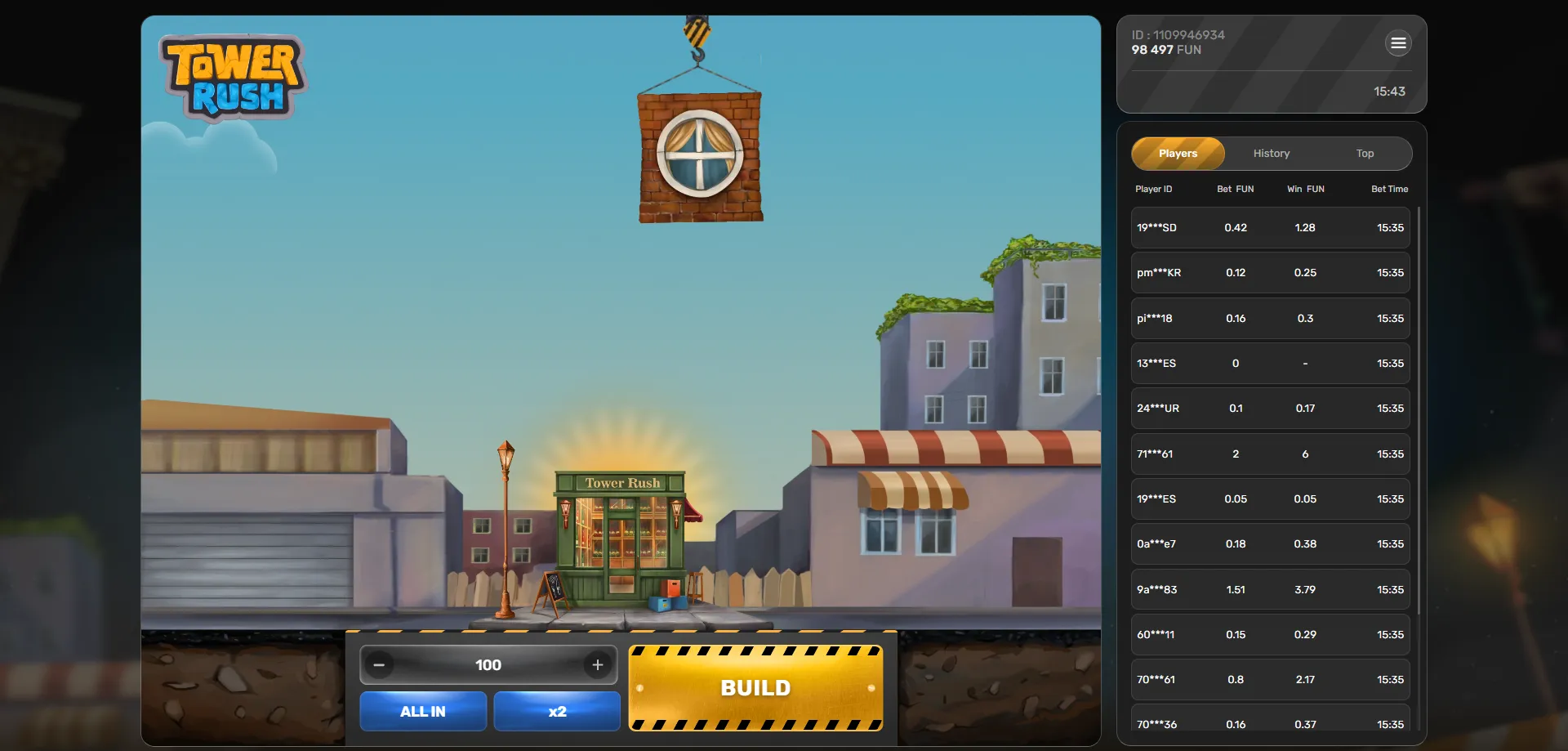
Online casinos offering Tower Rush often provide welcome bonuses and promotional credits that can extend your effective bankroll. Platforms such as Victory88 (150% up to MYR 800), Me88 Malaysia (200% up to MYR 600), and BK8 (200% up to MYR 800) all list Tower Rush among their eligible games. Before accepting a bonus, read the wagering requirements carefully — a 30x or 40x wagering requirement on a bonus means you must turn over the bonus amount many times before withdrawing, and a game with a 98.50% RTP will clear wagering more efficiently than a high-house-edge table game, but it still takes volume. The smart integration of a bonus into your strategy is to use it to extend session length during the flat-betting phase, not to inflate individual bet sizes and chase high multipliers. The Tower Rush demo is equally valuable: use it specifically to rehearse your cashout discipline and test your chosen betting system without any real money at stake before committing your first deposit.
Even a well-designed strategy collapses if the player cannot maintain mental discipline under pressure. Two psychological traps are especially common in crash-style games like Tower Rush.
The gambler's fallacy is the belief that past outcomes influence future results in a game governed by an RNG. In Tower Rush, if the last five towers collapsed at floor three, there is no statistical basis to believe the next tower will reach floor ten as "compensation." Each round is independent. The related trap is the "hot tower" illusion — the feeling that the game is "on a run" and that now is the time to let multipliers build higher. This feeling is emotionally compelling and mathematically meaningless. The RNG has no memory and no mood. Your cashout target should be set before each round based on your strategy, not adjusted mid-round in response to recent history.
Losing streaks are a mathematical certainty in any game of chance, including Tower Rush. The strategic response is simple but psychologically hard: reduce your stake (if using flat betting, hold it steady; if using a progressive system, return to base immediately) and honour your session loss limit without negotiation. The single most destructive behaviour a player can exhibit is increasing bet size in response to losses in an attempt to "get even" quickly. This is how small, manageable losses become session-ending bankroll collapses. A practical tool is the five-minute pause rule: whenever you feel the urge to chase a loss, close the game for five minutes. Most of the time, the impulse passes. If it does not, that is a signal to end the session entirely.
One of the most underused tower rush tips and tricks available to any serious player is maintaining a simple session log. After each session, record four data points: date and duration, starting bankroll, ending bankroll, and any notable events (bonus floor triggers, largest multiplier reached, number of consecutive losses). Over ten or twenty sessions, patterns emerge. You will see which bet sizes correlate with positive sessions, whether your win target or loss limit is calibrated correctly for your actual play style, and whether specific times of day or session lengths produce different results. This is not superstition — it is data collection. Players who review their logs regularly make better strategic adjustments than those who rely purely on memory and gut feeling. A simple spreadsheet or even a notebook works perfectly well for this purpose.
Before you explore more game mechanics in depth, you can visit the /how-to-play page for a full breakdown of Tower Rush rules and mechanics — useful context if you want to align your strategy with a deeper understanding of how each bonus floor triggers and how the multiplier chain works.
Consolidating everything in this guide into a practical pre-session routine is the final step in turning knowledge into consistent behaviour. Before every Tower Rush session in 2026, run through the following checklist:
This checklist takes under two minutes to complete and represents the entire practical output of a sound tower rush strategy. The game itself is fast-paced and exciting — Galaxsys designed Tower Rush to create genuine tension with every floor drop. The checklist is what ensures that excitement works in your favour rather than against your bankroll.
Sign up today and get an exclusive bonus to start your ascent. Claim your free spins and conquer the reels!
🎯 Play Now🔒 18+ · T&C Apply · Play Responsibly